In the hushed corners of antique shops and the curated displays of high-fashion runways, a quiet yet potent revolution is taking place. The humble brooch, long relegated to the status of a grandmother’s forgotten heirloom, is experiencing a remarkable renaissance. No longer merely a decorative clasp for a scarf or a lapel, it has been reborn, transformed into a powerful medium for personal narrative, political statement, and artistic expression. This resurgence speaks to a deeper cultural shift, a collective yearning for tangible objects with history and meaning in an increasingly digital and ephemeral world.
The brooch’s fall from grace was as pronounced as its current ascent. For decades, it dwelled in the realm of the antiquated, a symbol of a bygone era of formal dress codes and stuffy elegance. It was the accessory of choice for prim secretaries in mid-century offices and matriarchs at family gatherings, often featuring safe, conventional designs like floral sprays, faux pearls, or delicate animal motifs. Its function was purely ornamental, a final, polite touch to an outfit. As fashion trends accelerated towards minimalism, casualwear, and fast fashion in the late 20th and early 21st centuries, the brooch seemed destined to remain a charming relic, appreciated only by vintage enthusiasts and collectors.
However, the cyclical nature of fashion and a growing appetite for sartorial individuality began to breathe new life into this dormant accessory. The rise of vintage and sustainable fashion movements played a pivotal role. As consumers became more conscious of the environmental and ethical implications of their purchases, they turned to second-hand and vintage clothing. In rummaging through the past, they rediscovered brooches—unique, well-crafted pieces that told a story. Wearing a vintage brooch became a way to connect with history, to reject mass-produced homogeneity, and to cultivate a personal style that was truly one’s own. Designers took note, and soon contemporary interpretations began appearing on international catwalks, often oversized, abstract, and crafted from unexpected materials, signaling the brooch’s official return to high fashion.
But the most significant transformation has been the brooch’s evolution from a passive ornament into an active signifier. In an age of social media and heightened political awareness, people are constantly seeking new ways to visually communicate their beliefs, affiliations, and identities. The lapel, a small but highly visible canvas, has become a prime real estate for such declarations. The brooch, or pin, is the perfect vehicle for this form of micro-messaging. This is not an entirely new phenomenon; think of the AIDS red ribbon of the 1990s or the yellow "Live Strong" bracelet. The modern iteration, however, is more diverse, more artistic, and more integrated into personal style.
Today, a brooch can be a bold political manifesto. In recent years, we have seen an explosion of pussyhat pins, fist symbols for Black Lives Matter, and safety pins worn as a silent show of solidarity with vulnerable communities. These are not just accessories; they are badges of honor and commitment. They allow the wearer to take a stand literally on their sleeve, fostering a sense of community and shared purpose with others who recognize the symbol. In a crowded and often noisy digital landscape, this tangible, physical form of advocacy carries a unique weight and sincerity.
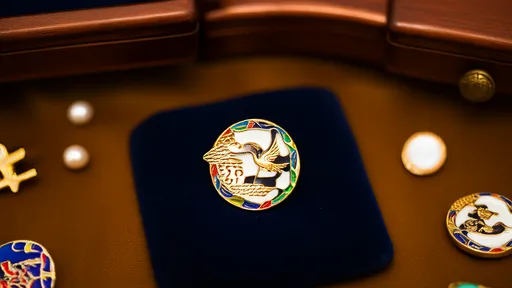
Beyond overt politics, brooches have become tools for expressing nuanced aspects of personal identity. Fan cultures have embraced enamel pins to showcase allegiance to favorite films, bands, or video games. The subtle language of queer coding, long a part of LGBTQ+ history, often employs specific symbols—a hanky code updated for the modern era, with pins indicating everything from relationship status to subcultural affiliation. A person might wear a pin featuring a mythological creature to hint at their non-binary identity, or a specific flower whose meaning is known within their community. This allows for a form of communication that is both public and discreet, creating pockets of recognition and safety in plain sight.
The artistry behind modern brooches has also expanded dramatically. Contemporary makers, often found on platforms like Etsy or at independent craft fairs, are pushing the boundaries of the form. They work with materials ranging from traditional precious metals and gemstones to polymer clay, resin, recycled plastics, and even electronic components with LED lights. The subjects are equally diverse: miniature landscapes, surrealist art, geometric patterns, and witty pop-culture references. This democratization of design means there is a brooch for every possible aesthetic and ideology, making the accessory more accessible and relevant than ever before.
The method of wearing brooches has also been liberated from convention. While the lapel remains a classic spot, modern style icons and fashion influencers are pinning them everywhere: clustered on the straps of a handbag, adorning the brim of a hat, fastened to the collar of a denim jacket, or even used to cinch the waist of a dress. This inventive styling reinforces the idea of the brooch as a dynamic and versatile element of an outfit, rather than a static, formal accent. It encourages playfulness and personalization, inviting the wearer to truly make the piece their own.
Ultimately, the revival of the brooch is a testament to a broader human desire. In a world of fleeting trends and digital interactions, we crave objects with weight, history, and purpose. A brooch is tactile. You feel its pin secure it to your garment. You notice its presence throughout the day. Unlike a post that disappears into a feed or a story that vanishes after 24 hours, a brooch is a permanent, physical commitment to an idea, a memory, or a beauty. It is a small anchor of authenticity.
The journey of the brooch from a vintage accessory to a badge that expresses a stance) mirrors our own evolving relationship with fashion and communication. It proves that an object’s meaning is not fixed but is constantly rewritten by the culture that adopts it. The brooch is no longer just about what it is, but about what it says. On the lapels, bags, and hats of people around the world, these small, powerful objects are whispering, declaring, and shouting the values, passions, and identities of those who wear them. They are, in the most elegant way possible, making a point.

By /Aug 21, 2025

By /Aug 21, 2025

By /Aug 21, 2025
By /Aug 21, 2025
By /Aug 21, 2025
By /Aug 21, 2025

By /Aug 21, 2025

By /Aug 21, 2025
By /Aug 21, 2025
By /Aug 21, 2025

By /Aug 21, 2025
By /Aug 21, 2025
By /Aug 21, 2025
By /Aug 21, 2025
By /Aug 21, 2025
By /Aug 21, 2025
By /Aug 21, 2025

By /Aug 21, 2025

By /Aug 21, 2025

By /Aug 21, 2025