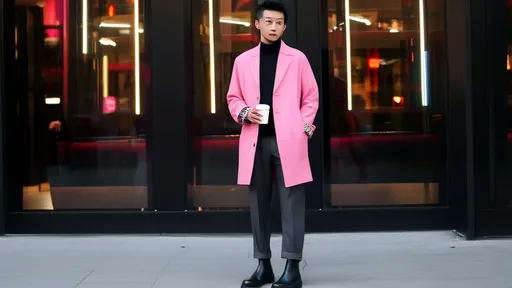
In the landscape of men's fashion, few shifts have been as quietly revolutionary as the reclamation of pink. Once relegated to the fringes of the masculine wardrobe, dismissed as effeminate or frivolous, pink has staged a remarkable comeback, striding confidently from the runways into the mainstream. This isn't a fleeting trend but a profound cultural reset, a chromatic liberation challenging decades, if not centuries, of ingrained sartorial dogma. The journey of pink from a colour to be avoided to a colour of confident choice is a story of changing masculinity, savvy marketing, and a generation willing to wear what it wants.
The history of pink is a palette of contradictions. For much of the 19th century, pink was actually considered a strong, masculine colour, a watered-down derivative of red, which symbolised war, blood, and power. Blue, being softer and more delicate, was associated with the Virgin Mary and was thus the domain of girls. The great shift occurred in the mid-20th century, particularly in the post-war era. Sociologists and historians often point to the consumer culture of the 1940s and 1950s, where manufacturers and advertisers, in a bid to expand markets, cemented the pink-for-girls, blue-for-boys dichotomy. This rigid colour coding became a powerful, albeit arbitrary, social rule.
For men, stepping outside this prescribed colour box came with social risk. To wear pink was to invite questioning of one's masculinity, an accusation no man in a homogeneously masculine culture would risk lightly. It became the colour of the bold dandy or the counter-cultural rebel, but never the everyman. It was locked away, a symbol of everything traditional masculinity was defined against.
The first cracks in this chromatic armour appeared not on the catwalks, but on the sports fields and in the prep schools of America. The preppy aesthetic of the 1980s, with its polo shirts, cable-knit sweaters, and popped collars, offered a safe harbour for pastels. A light pink polo shirt, often from brands like Ralph Lauren, became a symbol of East Coast privilege and a certain relaxed, confident masculinity that was athletic yet refined. It was pink, but it was also expensive and exclusive, which granted it a pass. Simultaneously, the rise of global pop culture icons played a crucial role. Artists like Prince and later, Pharrell Williams, wore pink not as a whisper but as a declaration, blending it with a rock-and-roll or hip-hop edge that made it seem powerful, not passive.
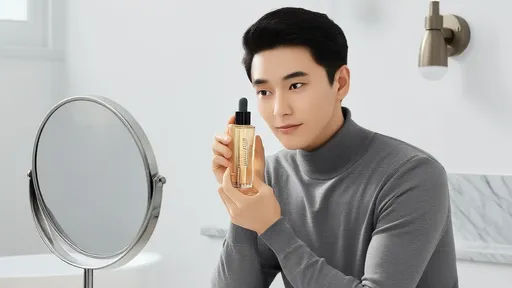
The new millennium accelerated this acceptance. Metrosexuality in the early 2000s championed a new kind of male consumer—one who was interested in grooming, fashion, and self-presentation. This movement dismantled the idea that caring about appearance was unmanly. Within this new framework, colour became another tool for expression. Magazines like GQ and Esquire began featuring pink in their fashion spreads, styling it with navy suits, grey trousers, and denim, demonstrating its versatility and, most importantly, its normality.
Then came the social media age, the great democratiser and accelerator of trends. Platforms like Instagram and Pinterest became endless lookbooks, where men could see other men—influencers, actors, and everyday guys—wearing pink and looking sharp, confident, and utterly masculine. The fear of standing out was replaced by the desire to fit into a new, more interesting style tribe. The internet provided both the inspiration and the community validation that made experimentation feel safe. Suddenly, pink wasn't a risk; it was a way to gain style points.
The fashion industry, always keen to capitalise on a cultural shift, went all in. Designers sent models down the runways in every conceivable shade of pink, from bold fuchsia to soft millennial pink. High-street brands like Uniqlo, J.Crew, and Zara followed suit, flooding the market with accessible pink garments—shirts, chinos, sweaters, and even suits. The messaging was clear: this was not a niche trend. Luxury brands were particularly instrumental; a pink suit from Tom Ford or a rose-quartz shirt from Brunello Cucinelli carries a certain authority, signalling that if it's good enough for the apex of menswear, it's good enough for anyone.
But why now? The embrace of pink is deeply intertwined with the modern evolution of masculinity itself. The rigid, stoic archetype of the past is giving way to a more inclusive, expressive, and emotionally intelligent ideal. Modern masculinity is increasingly defined by confidence—not the confidence to conform, but the confidence to be oneself. Wearing pink has become a subtle yet powerful signifier of this confidence. It says, "I am secure enough in who I am that I don't need my clothes to conform to outdated rules to prove my manhood." It’s a rejection of toxic fragility and an embrace of a more authentic self-expression.
On a practical level, the appeal is also aesthetic. Pink is an incredibly flattering colour. It can warm up the complexion, pair beautifully with a huge range of other colours (it’s a neutral now, argue some stylists), and add a pop of interest to an otherwise muted wardrobe. A navy suit with a pale pink shirt is a classic combination. A grey sweatshirt with dusty pink joggers is a lesson in elevated casualwear. A bright pink swim short makes a statement on the beach. Its versatility is its greatest strength.
The conquest is nearly complete. Today, it is not uncommon to see pink on Wall Street bankers, Silicon Valley tech bros, and construction workers on a weekend alike. It has been stripped of its baggage and re-contextualised as what it always was: just a colour. And a pretty useful one at that. The liberation of colour in men's fashion, with pink as its standard-bearer, reflects a broader cultural movement towards individuality and the erosion of pointless gendered boundaries. The modern man's wardrobe is a more colourful, creative, and personal place because of it. The revolution may have been quiet, but its results are vibrantly, unapologetically, loud.

By /Aug 21, 2025
By /Aug 21, 2025
By /Aug 21, 2025
By /Aug 21, 2025
By /Aug 21, 2025
By /Aug 21, 2025
By /Aug 21, 2025

By /Aug 21, 2025
By /Aug 21, 2025
By /Aug 21, 2025
By /Aug 21, 2025
By /Aug 21, 2025
By /Aug 21, 2025
By /Aug 21, 2025
By /Aug 21, 2025
By /Aug 21, 2025
By /Aug 21, 2025

By /Aug 21, 2025

By /Aug 21, 2025
By /Aug 21, 2025